Artist
Fletcher Larkin
pottery
About
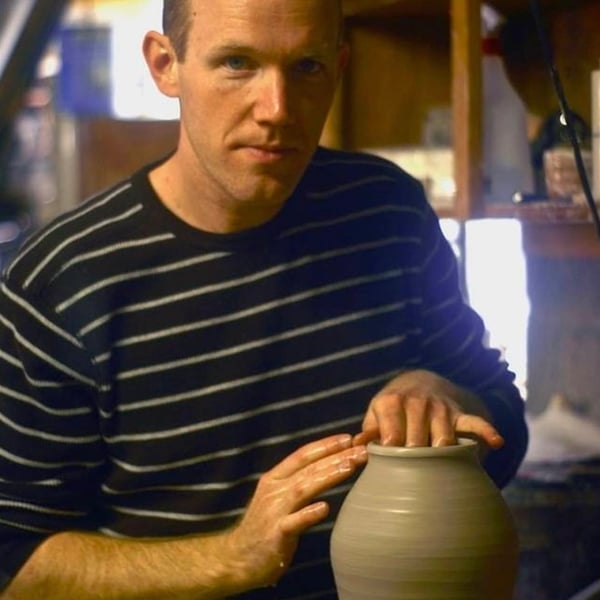
Fletcher Larkin is a studio potter based in Little Rock, Arkansas, whose work draws from deep roots in the craft tradition and a sustained engagement with East Asian ceramic aesthetics. Raised in Hot Springs, he grew up shaping clay alongside his parents, Barbara and Jim Larkin, founders of Fox Pass Pottery — one of Arkansas's most established studio pottery operations. That early immersion instilled in him a respect for functional ware and handmade process that continues to define his practice.
Larkin pursued formal training at East Carolina University, earning his BFA with an emphasis in ceramics in 2001. The program sharpened his technical foundation and broadened his visual vocabulary, introducing influences that would eventually surface in the quieter, more contemplative register of his mature work.
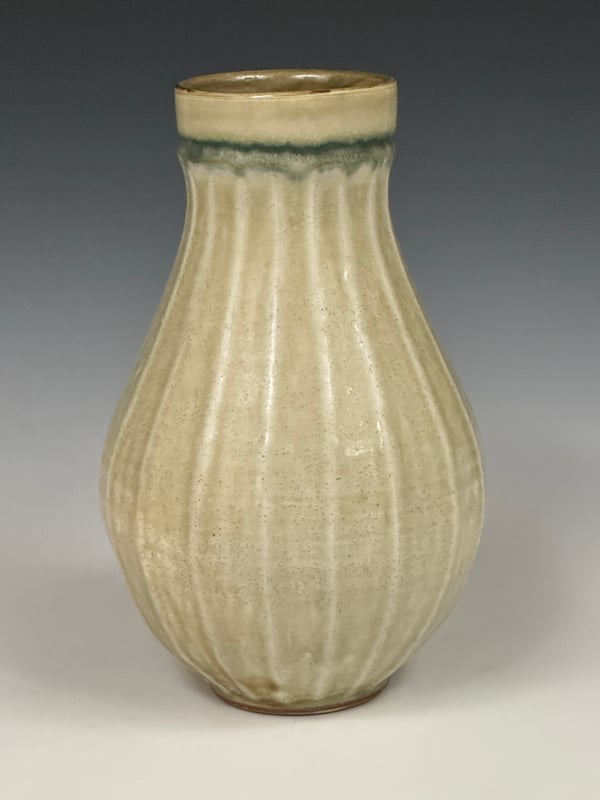
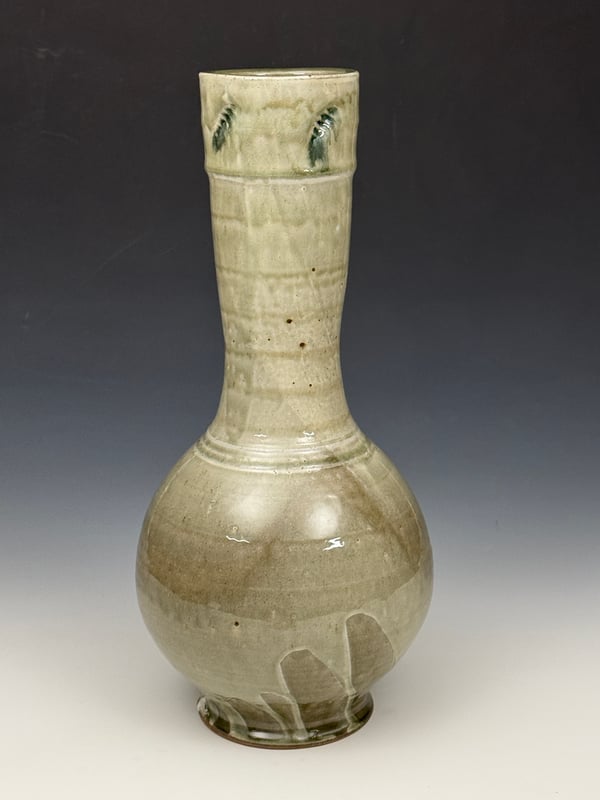
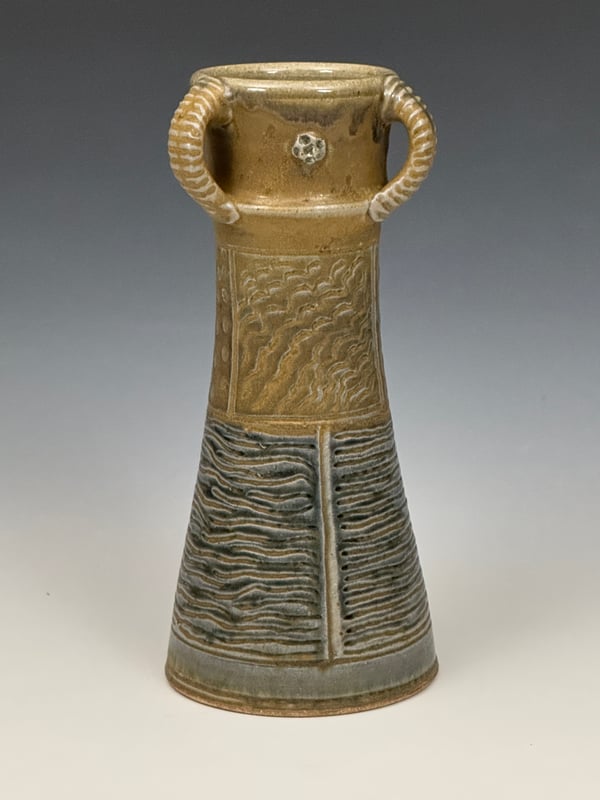
His current pieces move between wheel-thrown and hand-built methods, often within the same body of work. Several recent vessels display the clean silhouette of East Asian bottle forms, finished in celadon and muted green glazes that reward slow looking — surfaces that shift subtly under diffused light, revealing fluted textures and fine glazing variations. Other works push in a more architectural direction: hand-built forms with carved rope handles, textured walls, and layered palettes of warm ochre and blue-gray that feel both ancient and immediate.
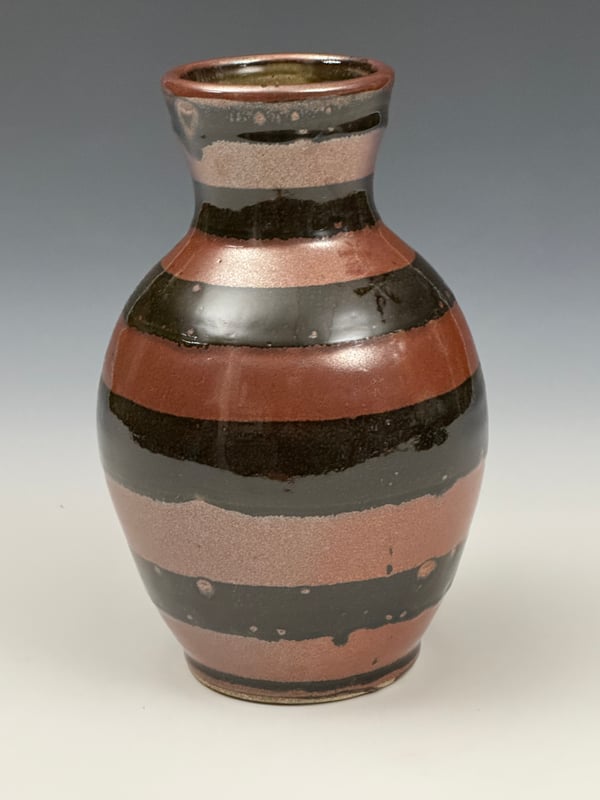
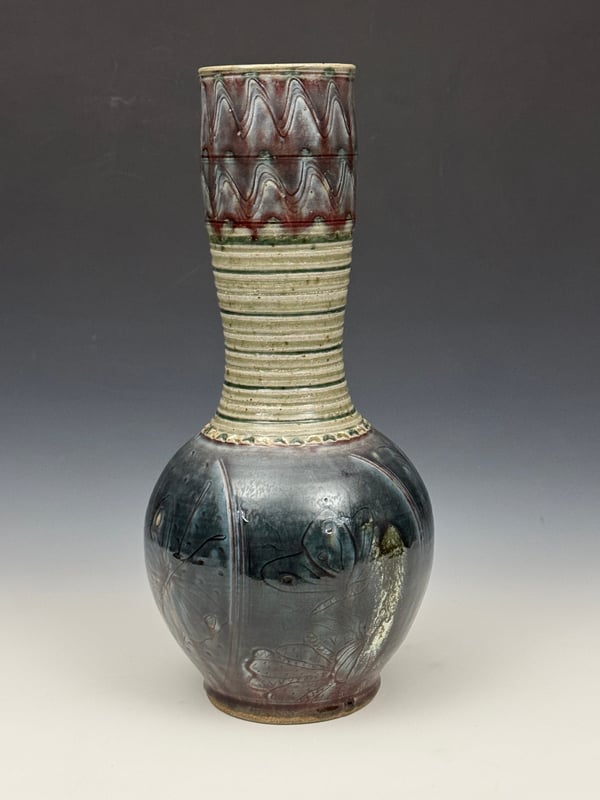
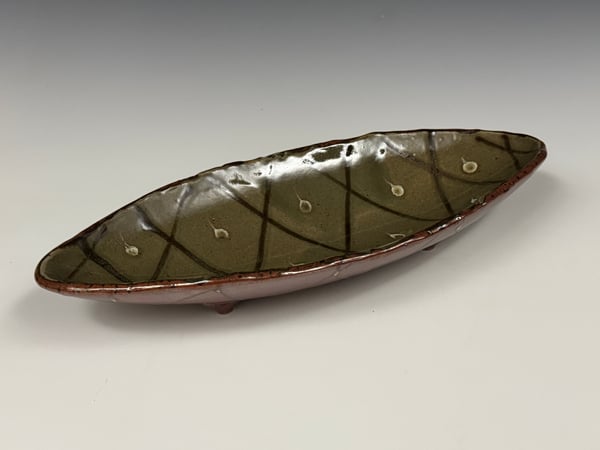
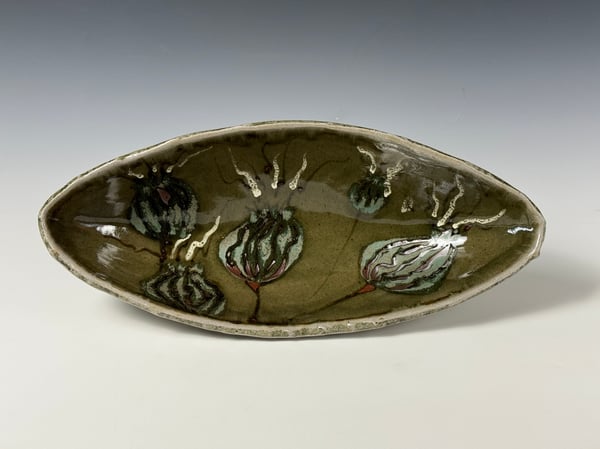
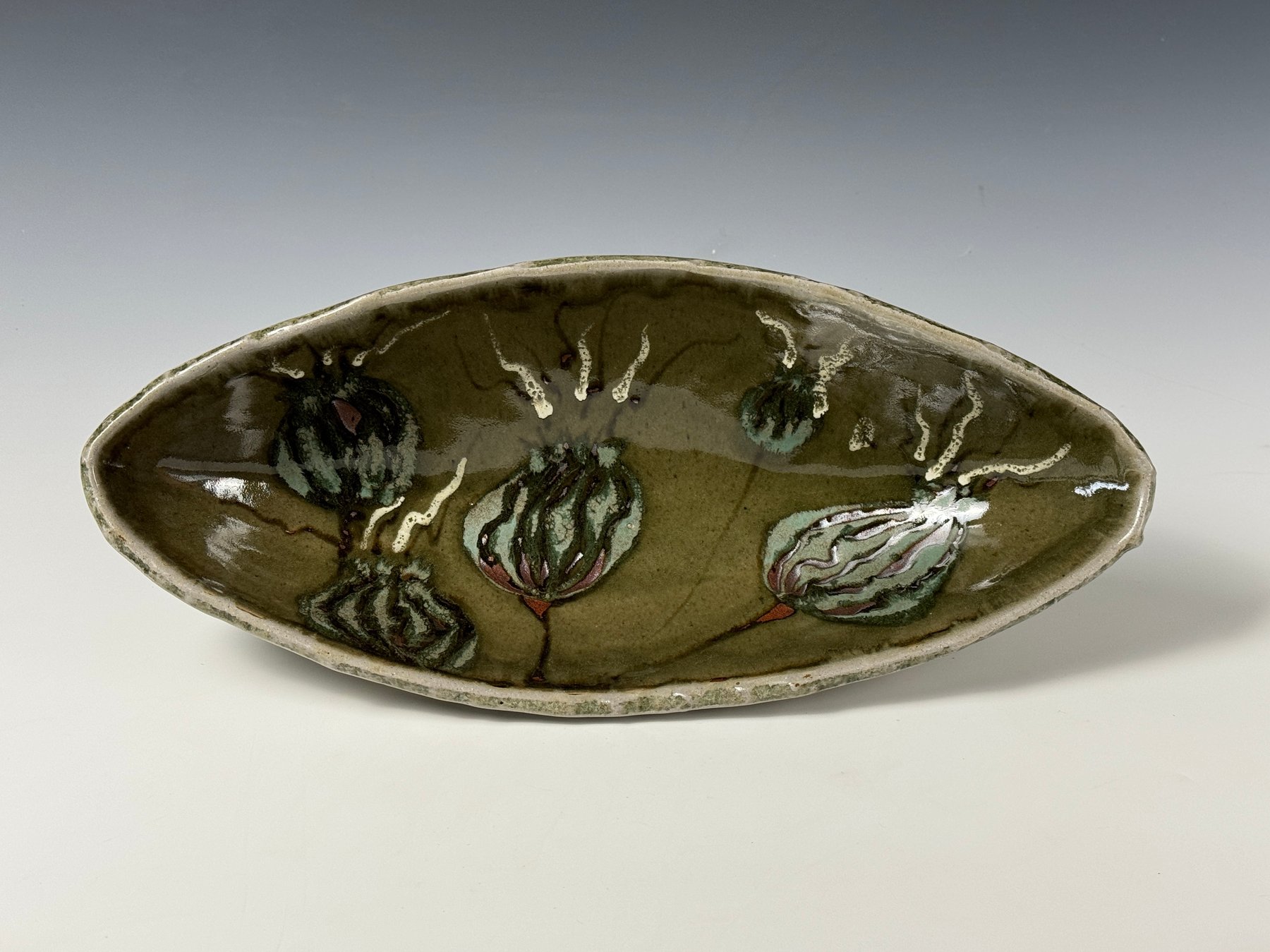
Decoration, when it appears, is restrained and purposeful. A 2026 hand-built vessel incorporates incised botanical motifs — seed pod imagery rendered in olive green and teal against an earthy ground — while other pieces use horizontal banding or diamond-pattern incising to punctuate otherwise spare surfaces. Oxblood accents and deep-blue glazes occasionally introduce a more dramatic chromatic tension, though the overall sensibility remains grounded and unhurried.
Across vessel forms that range from boat-shaped dishes to tall stoneware bottles, Larkin maintains a consistent fidelity to function without sacrificing formal invention. His work carries the accumulated knowledge of a family tradition without being confined by it — pieces made by someone who has spent a lifetime in conversation with clay, and who still finds the exchange genuinely open.